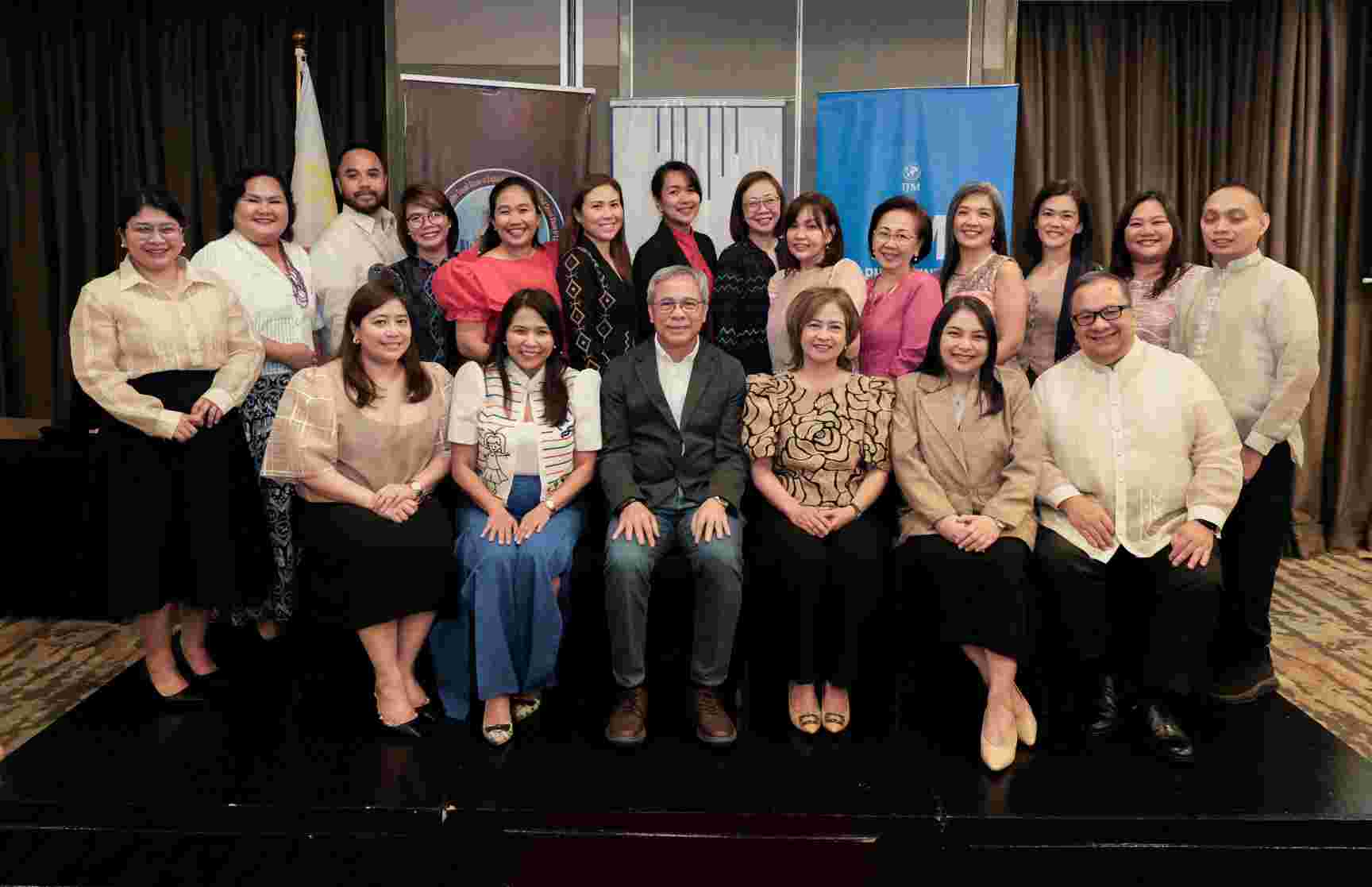
Around 1,500 advocates joined the fight to end online sexual abuse or exploitation of children (OSAEC) by taking part in the five-kilometer Community Run Against OSAEC in Ortigas East, Pasig City. The event marked the launch of a new campaign urging Filipinos to immediately report suspected OSAEC cases to authorities.
Held on November 22, the run was organized by International Justice Mission (IJM) Philippines and the Department of Justice - Inter-Agency Council Against Trafficking (DOJIACAT). It kicked off the “May Kutob? Mag-Report” campaign, reinforcing a call for communities to help authorities disrupt ongoing child sexual abuse and exploitation.
“Protecting a child begins with something as simple as a kutob, a feeling that something is not right,” said IJM Philippines Community Engagement Director Evelyn Pingul. “We don’t need to have proof of abuse before reporting our concerns. Through this campaign, we want to encourage every Filipino to recognize the warning signs, speak up, and take action. One report could make all the difference in a child’s life.”
A typical OSAEC case involves a Filipino trafficker, often a trusted adult, recording or livestreaming the sexual abuse of a child in exchange for money from a remote sex offender abroad who watches and directs the abusive acts.
DOJ Assistant Secretary Michelle Anne Lapuz urged Filipinos to call the IACAT 1343 Actionline if they notice OSAEC red flags or have information that could help law enforcement initiate an investigation.
“The Philippine government has functional helplines staffed by operators equipped to handle reports of possible OSAEC incidents,” said Lapuz, who leads IACAT. “Remaining silent despite having kutob or suspicion that a child is being sexually abused and exploited online only enables traffickers to continue their crimes and inflict further trauma on their victims.”
Often taking place within the home, OSAEC is a pervasive yet underreported crime that is too often dismissed as a private family matter. According to a study by IJM Philippines and the University of Nottingham’s Rights Lab, one in every 100 Filipino children experienced OSAEC in 2022 alone.
Children affected by OSAEC may exhibit warning signs such as chronic fatigue from possible late-night livestreaming sessions, social withdrawal due to trauma, or visible distress.
Household indicators may also suggest exploitation, including frequent visits to money remittance centers despite having no known family ties abroad, unexplained improvements in lifestyle, or the presence of multiple gadgets and internet-enabled devices without a clear purpose.
IJM Philippines and DOJ-IACAT organized the run in partnership with Women’s Run PH, with support from the Pasig City Government, the Pasig City Police Office, and the Philippine National Police – Women and Children Protection Center.
Ambassador Roderick Wols of the Kingdom of the Netherlands in the Philippines led the ceremonial send-off of the runners, among them several Dutch participants who are in the country for Muskathlon, a separate endurance event that also supports efforts to combat online sexual abuse or exploitation of children (OSAEC).
Along the race route, participants encountered “OSAEC red flags,” educational materials highlighting warning signs that should prompt immediate reporting to authorities for proper investigation.
Pingul commended the Pasig City Government for supporting a major campaign against OSAEC and encouraged local government units across the country to mount similar initiatives to address what appears to be the normalization of OSAEC in some communities.
“The online sexual abuse or exploitation of children is a massive problem, but when we work together, from national government agencies to cities, municipalities, and barangays, we can end it. By acting now, we can protect today’s children and future generations,” Pingul said.
Report OSEAC Now
1343 Actionline (IACAT): Dial 1343 or visit 1343 Action Line to report suspected human trafficking and OSAEC.
Makabata Helpline: Call or message 1383.
PNP Women and Children Protection Center (WCPC): Call 0966-725-5961 (Globe) or 0919-777-7377 / 0920-907-1717 (Smart).
NBI Anti-Human Trafficking Division: Call (02) 8521-9208.
Local Assistance: Reach out to your local Barangay Council (Barangay Protection of Children), local social welfare office (MSWDO/CSWDO), or Bantay Bata 163.