Online sexual abuse and exploitation of children is a crime involving two interconnected forces: the exploitation of children where the abuse is produced, and the demand from offenders who pay for, direct, and consume that abuse.
Much of IJM Philippines’ work involves collaborating with government and community partners to strengthen protection for children, support survivors, and hold perpetrators accountable. Meanwhile, IJM’s Center to End Online Sexual Exploitation of Children focuses on reducing the demand that fuels these crimes.
Encouragingly, recent developments in key demand-side countries suggest growing momentum toward that goal. New research from the United States and Canada shows strong public support for action and legislation against online child sexual abuse and exploitation. Citizens increasingly expect governments and technology companies to prevent livestreamed abuse, strengthen safeguards, and hold offenders accountable.
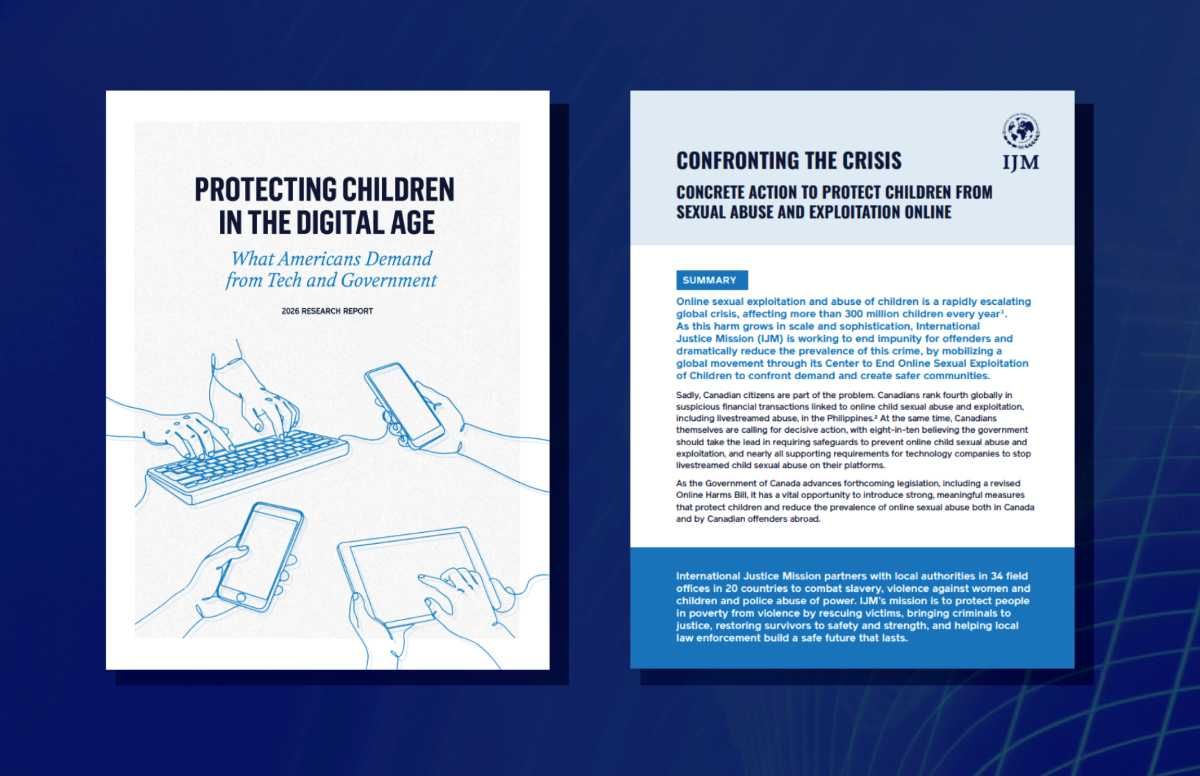
Protecting Children in the Digital Age: What Americans Demand from Tech and Government shares the results of a national survey commissioned by IJM in the United States to gauge public sentiment on internet safety and initiatives aimed at protecting children online.
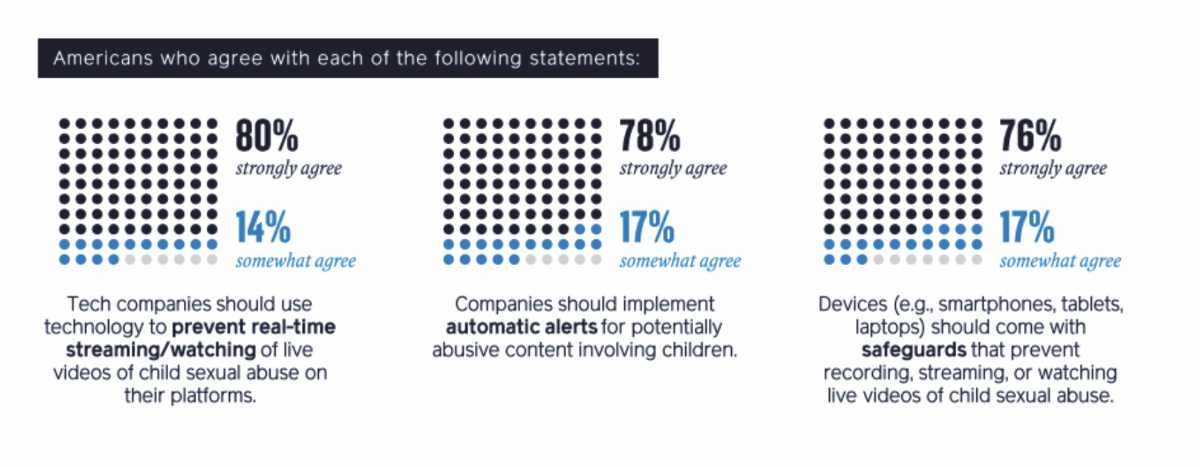
The results show what the American public expects from its government and from the technology companies whose platforms and smart devices have become primary venues for exploitation.
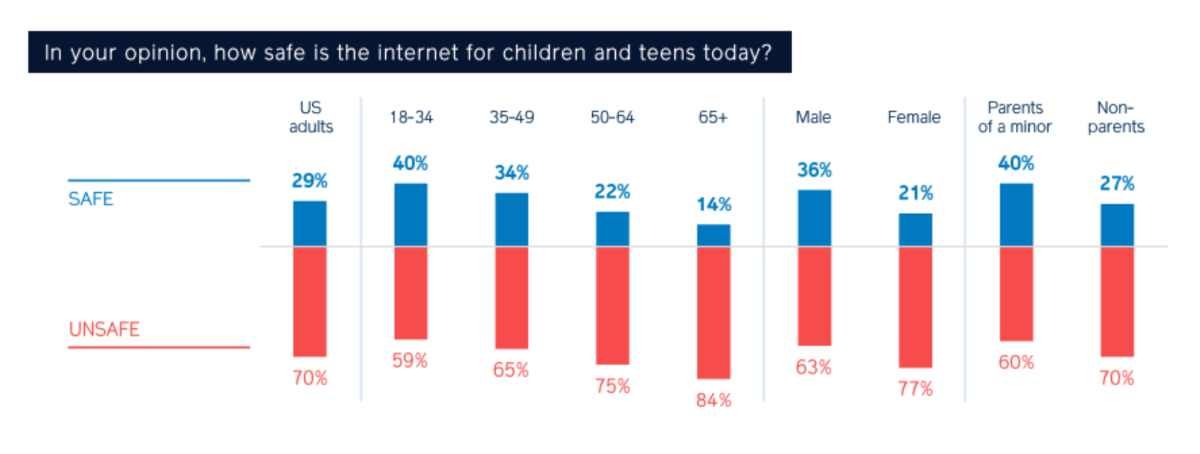
The findings reveal deep public awareness and concern, and a clear and bipartisan mandate for action.
Read the report here.
In Confronting the Crisis: Concrete Action to Protect Children from Sexual Abuse and Exploitation Online, IJM’s Center to End Online Sexual Exploitation of Children offers seven recommendations for lawmakers. These include explicitly addressing livestreamed child abuse; defining in law the roles of digital device manufacturers and operating system providers; implementing safety-by-design standards across the technology industry; and centering survivor voices in online safety legislation.
The report shares new survey data on overwhelming Canadian sentiment in favor of stronger government-led child protection action.
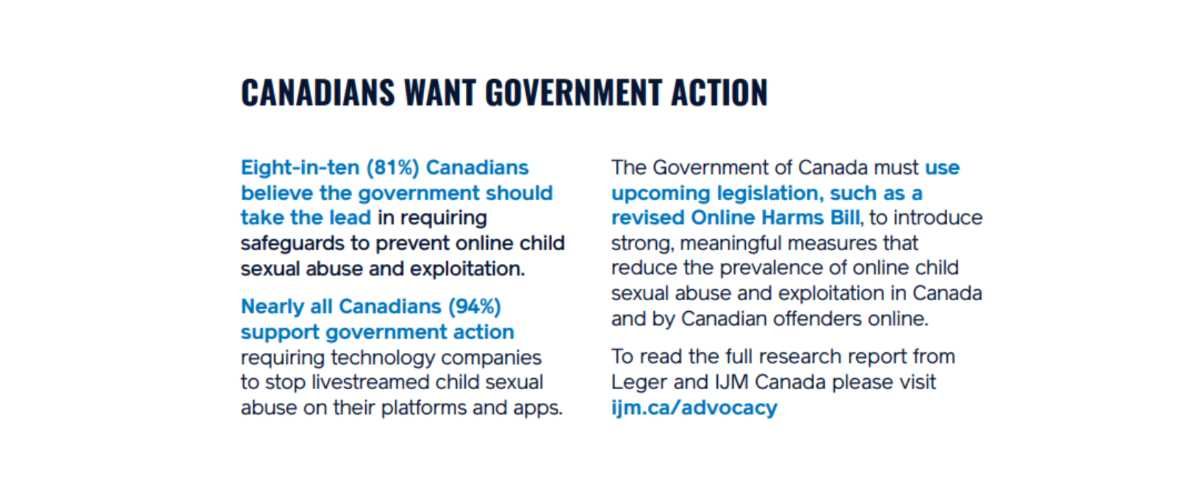
Read the recommendations here.
Key Insights:
The public favors child protection online
The research challenges a common assumption: that stronger online child protection measures are politically risky or unpopular. The survey evidence shows public support for stronger safeguards, accountability, and prevention measures, while the recommendations and white paper translate that support into practical steps for governments and technology companies.
The survey results demonstrate that demand-side countries have moved beyond asking whether action should be taken. They are calling for stronger action now.
Demand-side countries recognize their role in the problem
There is growing awareness in demand-side countries, including Canada, that demand originating within their borders can fuel online child sexual exploitation thousands of miles away.
Notably, survey respondents strongly support proactive measures by technology companies, including detecting, preventing, removing, and reporting child sexual abuse material and livestreamed abuse. This suggests that the public views child protection as a core responsibility of the technology sector, not merely a voluntary initiative.
These developments reflect a strengthening global movement to tackle the crime from both sides of the equation, bringing us closer to a future where fewer children are at risk and more perpetrators face barriers to offending in the first place.