Technology reports sent to law enforcement help investigators identify children, build cases, and hold offenders accountable. But only if they contain the necessary details.
In May 2026, IJM’s Center to End Online Sexual Exploitation of Children released Maximising Actionability of Child Sexual Abuse & Exploitation Online Reports, a practical guide for technology companies on making their reports to law enforcement more useful, so that more child victims can be identified and protected, and more offenders can be prosecuted.
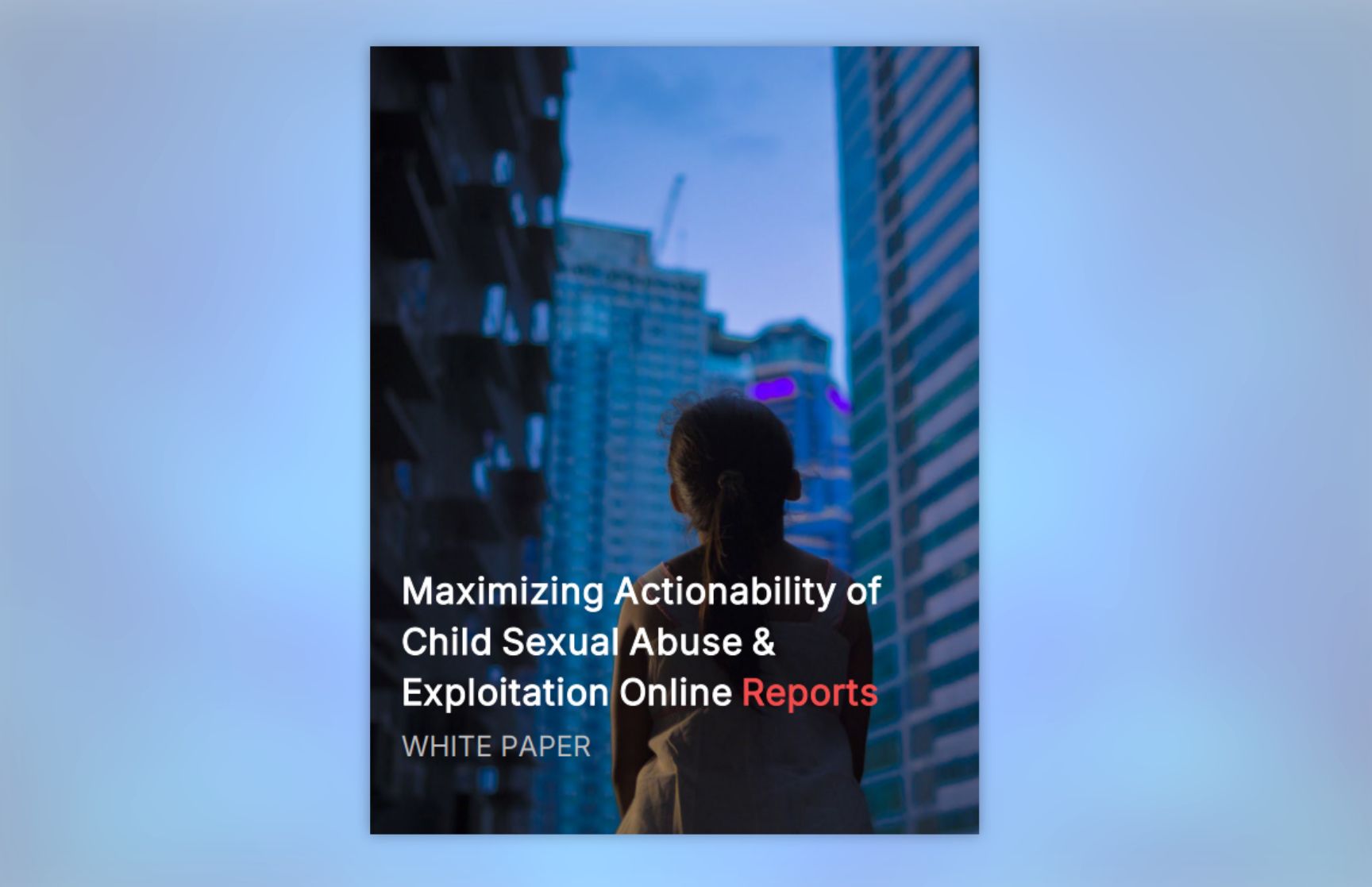
The paper is intended for electronic service providers and financial institutions, including companies that submit reports to the CyberTipline. Its central message is simple: reporting should not be treated as a compliance exercise alone. The details a company preserves and shares can determine whether a report becomes a viable lead or reaches a dead end.
The white paper highlights that millions of reports are already being submitted to authorities, but the quality and completeness of those reports often determine whether victims can be identified and safeguarded and whether offenders can be held accountable. When essential details are missing, law enforcement may struggle to identify the child at risk, trace the offender, connect related accounts, or preserve evidence before it disappears.
...millions of reports are already being submitted to authorities, but the quality and completeness of those reports often determine whether victims can be identified and safeguarded and whether offenders can be held accountable.
Drawing on IJM's experience supporting investigations in countries such as the Philippines, the paper identifies the specific information technology companies should include when reporting suspected abuse—such as account details, IP addresses, payment information, and contextualized data. These details can help law enforcement identify victims, build cases, and hold offenders accountable.
Technology and financial companies are uniquely positioned to detect indicators of abuse and preserve information that may not be available from any other source. Clear internal standards, consistent data collection, timely reporting, and close collaboration with law enforcement can make those reports more useful.
Better reporting matters. When companies provide complete, accurate, and contextualized information, they strengthen child protection efforts and law enforcement responses. A better report can help investigators find a child sooner, build a stronger case, and prevent further harm.
Read the white paper here.